
An athlete asked this question
Anyone familiar with imposter syndrome in middle aged athletes and how to get past it? I mean, not me, obviously, just asking generally.
It is surprisingly common to find masters rowers thinking that they are less skilled, less deserving of being in good crew lineups and generally “talk themselves down”. Have you noticed this?
They may be suffering impostor syndrome, defined as the persistent inability to believe that one’s success is deserved or has been legitimately achieved as a result of one’s own efforts or skills.
Personal perception is the key to understanding this. It’s about how you view yourself, and that persistent conversation with the voice inside your head – who may be a little destructive devil in need of some restraint.
I consulted a business leadership coach about this topic and she gave me this great insight.
A feeling of not belonging is a type of shame.
Empathy is the antidote to shame – and kindness is the flipside of judgement. If you’re to have more rowers at Masters level, clubs need to a be a strong sense of welcoming. Good clubs could have a group of ‘sherpas’ who each volunteer to mentor one newcomer.
Dr Brene Brown says
Shame says: never good enough. And Who do you think you are?
If you put shame in a petri dish, it needs three ingredients to grow exponentially: secrecy, silence, and judgment. If you put the same amount of shame in the petri dish and douse it with empathy, it can’t survive.”
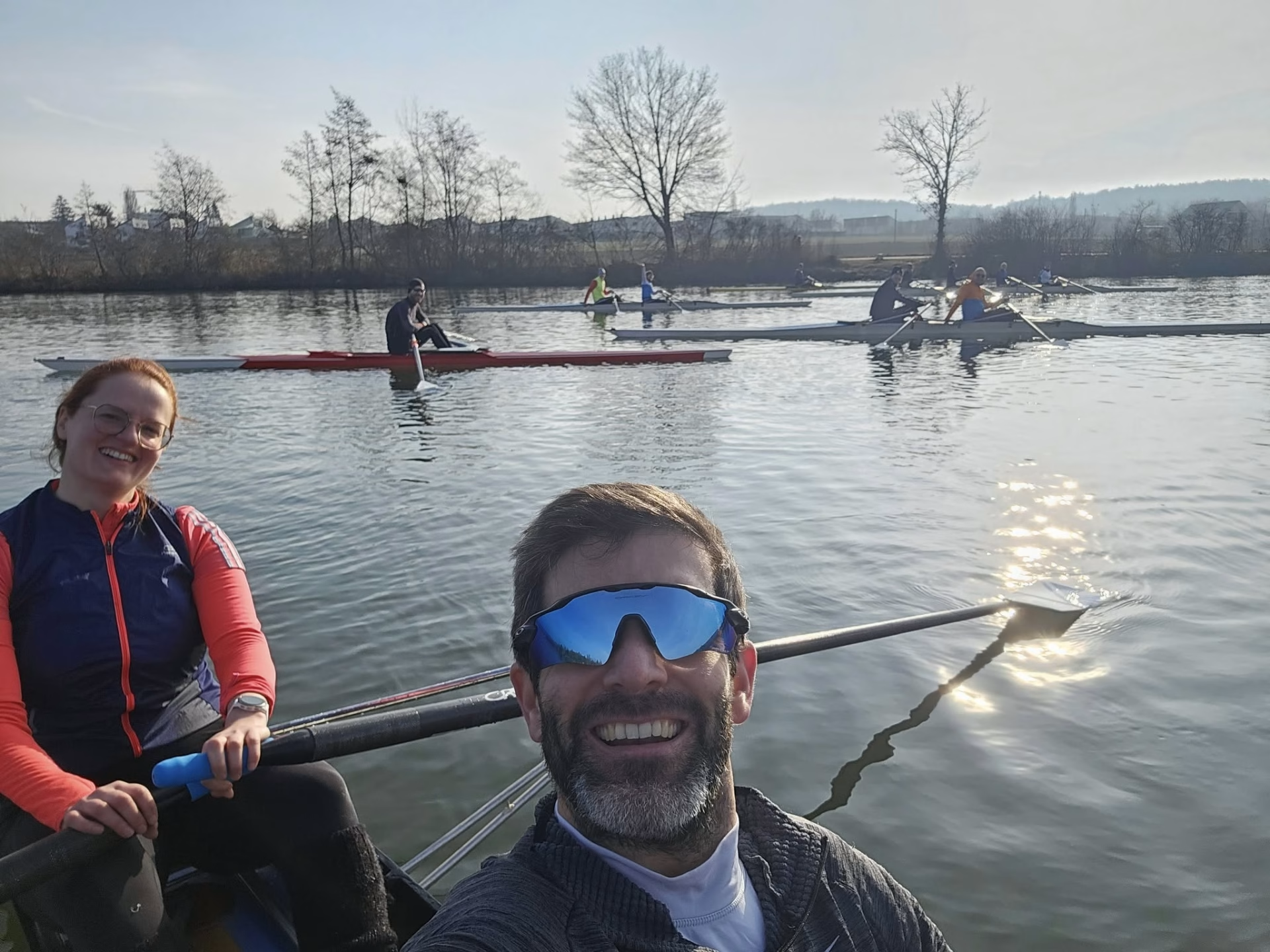
Dealing with rowing impostor syndrome
I suggest asking yourself how comfortable you are accepting praise, compliments and positive feedback? In my limited experience there is a correlation between people who deny and push back against this and choose to align their mindset with a more negative view of their rowing world.
Objectivity and fact gathering may be helpful to find out the validity of this perception.
Check in with an experienced rower or coach if you want to really find out what others think of your rowing skill. Ask them about your abilities, your progress on the learning ladder of rowing skill and what you should learn next. If feeling courageous, ask them about why you were in a particular crew lineup.
If seeking direct feedback is too unpalatable, you may have to step into a “bubble” of confident self belief and do some thinking. Searching for “cures” for impostor syndrome, the following were suggested:-
- Acknowledge your feelings.
- Talk to others.
- Develop a quick response plan.
- Understand your strengths and weaknesses.
- Overcome perfectionism.
- Own your successes.
Further research in a discussion thread from a Facebook rowing group revealed the following statements from masters rowers. Draw your own conclusions
- I personally have realized (belatedly) that it’s all about how I’m performing relative to myself. Key is why I’m doing it (because I enjoy it). Let everything else go.
- I row for the joy of it, to preserve what fitness I have, to be with my wonderful teammates, to see the sunrise every morning, and to push *myself*. The only standard that matters is to do a bit more than I did yesterday. If I do that, it’s a win.
- Stick with it. Have fun and occasionally contemplate all those people who couldn’t even get in and out of a boat much less pull on an oar (or two). Now that I’m 70+ people tell me I’m amazing and I love it. No one said that when I started rowing at 55.
- Each person contributes in a team boat. Listen to your heart and open your ears to your coach. I encourage you to talk to the coach or find a sports therapist for help. It’s very common and can bleed to other areas or cause you to walk away from something you love.
- Not specific to rowing, but focusing on the process and taking pleasure/geeking out on that as opposed to thinking about whether or not you are an imposter or what others think.
- Have you read the Boys in the Boat? About the 1936 Olympics? The Boys had an acronym they’d repeat to themselves: MIB, “Mind In Boat.” Pay attention to your rowing. What other people think is not important. When you are focussed on your rowing imposter syndrome will go away. It will. Keep your mind in the boat.
- This is a really thought-provoking topic. There is a fine line between feeling like an imposter and always wanting to improve your skills. I am trying to transition from the former to the latter currently!
- Those who think they need to improve, improve. It is a mark of a great athlete. Those that think they don’t need to improve, never do, and end up being left behind, and even worse, pulling their boat down with them. May we all feel like “imposters” and keep improving!! Some part of me thinks we aren’t meant to “get past it.”
- The line between constantly improving/learning/tweaking/fine tuning & questioning one’s worth is SO thin I often wonder of we have made it a “thing” when in reality it isn’t, ya know? I don’t suck as a cox’n or coach. That I know. Like, I ACTUALLY BELIEVE IT. BUT I still have days where I wonder if I actually know what the eff I am doing, & part of me is curious- if I didn’t have those days would I actually be worse off? Because those days humble me, snap me back to reality & almost force me to better myself (I assume most of us know the days I’m referencing, the ones where you swear you must be a novice again). So, while I am very well versed in imposter syndrome (just believe me in this, I swear it’s true), I also believe some of it is helpful. Not all of it. But SOME.
Author: Rebecca Caroe, Faster Masters Rowing